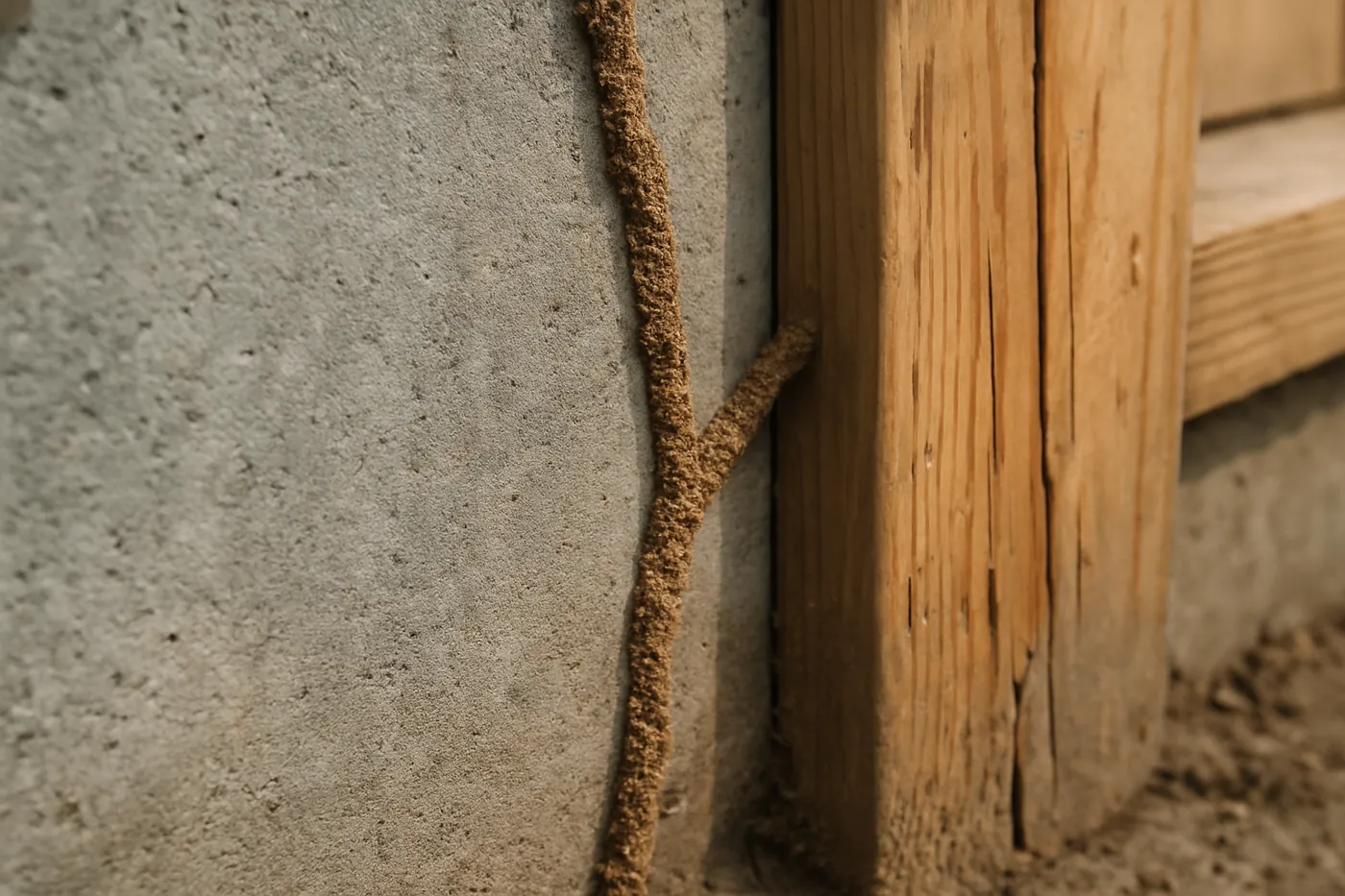
Termite control in Cleburne, TX protects the single most expensive thing termites can reach: the wood frame of your home. Subterranean termites are the main threat across North Texas, and Cleburne sits right in their range, where heavy blackland clay soil presses against slab foundations and gives these termites the moisture and soil contact they need. They work quietly and out of sight, so by the time most homeowners spot a problem, the colony has been feeding for a while. One call gets you a local exterminator who inspects, identifies, and treats termite activity in Johnson County homes, and the inspection is free.
Subterranean termites, the main Texas threat
Several termite types exist in Texas, but the eastern subterranean termite causes the overwhelming share of structural damage in this part of the state. These termites live in the soil and build mud tubes to reach wood above ground while staying hidden and humid. They eat cellulose: framing lumber, subfloor, trim, and anything wood touching or near the ground. A mature colony can hold hundreds of thousands of workers, all feeding on the same house. Because they tunnel inside the wood and leave a thin shell, the surface can look fine while the structure underneath is hollowed out. That is what makes subterranean termites different from a pest you simply see and swat. They demand a real inspection and a soil-and-structure treatment, not a can of spray.
Signs of termites in a Cleburne home
Knowing the warning signs lets you call before the damage gets deep:
- Mud tubes. Pencil-width tunnels of dirt running up a slab edge, a pier, or a garage wall. This is the clearest sign of subterranean activity.
- Spring swarms. A cloud of dark winged termites, usually on a warm, humid spring day, often near a window or the foundation.
- Discarded wings. Small piles of identical wings on windowsills, in spider webs, or by exterior doors after a swarm.
- Hollow or blistered wood. Trim and baseboards that sound papery when tapped, or paint that bubbles and dimples.
- Sticking doors and soft floors. Frames and floors that shift as termites eat the wood behind them.
Spot any of these and it is worth a look. Even with no signs, an annual check is cheap insurance on a home in this soil. The hard part about termites is that the absence of visible signs does not mean the absence of termites, since the colony can feed inside walls and under floors for a long time before anything reaches the surface. That is why a trained eye, checking the spots termites favor, finds problems a homeowner walks past every day.
Why Cleburne slabs are at risk
The local ground works against you here. Blackland clay swells when wet and shrinks when dry, and the long, hot, dry Cleburne summers crack it hard. Those cracks travel right to and under concrete slabs, opening hidden paths from the soil up into the foundation and the wood framing it supports. Subterranean termites follow exactly those routes, entering through expansion joints, plumbing penetrations, and slab cracks where no one can see them. The newer brick-on-slab subdivisions near the Chisholm Trail Parkway and out toward Lake Pat Cleburne sit on this same clay, and the older pier-and-beam homes around downtown and the Santa Fe district have wood closer to the soil in the crawl space, a different but real exposure. Either way, Cleburne homes give subterranean termites the conditions they want, which is why local inspections matter more here than in many places.
How termite treatment works
A local exterminator follows a clear process built around finding the colony and cutting it off from your home. Termite work is not a job for a hardware store can of spray, because the colony lives in the soil and the structure, out of reach, and the treatment has to get there.
Inspection. The exterminator checks the foundation, slab edges, crawl space, garage, and any wood-to-soil contact, looking for tubes, damage, and moisture. This no-obligation inspection tells you whether you have active termites and where.
Targeted treatment. For most homes the exterminator installs a liquid soil barrier, applying a termiticide in the soil around the foundation and at entry points so termites passing through pick it up and carry it back to the colony. The other main option is a bait station system set in the ground around the home, where foraging termites feed and spread a slow-acting bait that takes down the colony. Many homes use one, some use both, and the exterminator recommends what fits your foundation and the activity found.
Prevention. The exterminator then addresses what invited termites in: moisture against the slab, mulch or wood stacked on the foundation, leaking spigots, and poor drainage. Cutting the moisture and the wood-to-soil contact makes the home a harder target and helps the barrier last. For homes going up, a new-construction pre-treatment puts a termiticide barrier in the soil before the slab is poured, the cheapest time to protect a house, since the soil under a finished slab is hard to reach later without major work.
Liquid barrier or bait stations
Homeowners often want to know which treatment they will get, so here is the plain version. A liquid soil barrier is the workhorse: the exterminator applies a termiticide in the soil around the foundation and at the spots termites use to enter, creating a treated zone that termites cannot cross without picking up the product and carrying it back to the colony. It works fast and protects the whole perimeter. A bait station system takes a different angle: the exterminator sets stations in the ground around the home, and foraging termites feed on a slow-acting bait and share it through the colony until the colony collapses. Baiting is quieter and monitors for activity over time, while a barrier acts on a broad front right away. Some homes are best served by one, some by the other, and some by both together. The foundation type, the activity the inspection finds, and the home's history all factor in, and a local exterminator recommends the approach that fits rather than selling a single product to every house. Either way, the aim is the same: reach the colony, not just the termites you happened to see.
The spring swarm season
Spring is when subterranean termites announce themselves. As the weather warms and humidity rises, mature colonies release winged reproductives, called swarmers, that fly out to start new colonies. In Cleburne this typically happens on warm spring days, often after rain, and a swarm near your home is a strong hint that a colony is already established close by, sometimes in the structure itself. If you find swarmers indoors or piles of shed wings on a sill, treat it as a same-week call. The swarmers do not damage wood, but they prove a working colony exists, and the workers you never see are the ones eating the frame. Catching it in spring beats discovering the damage a year later.
The cost of waiting
Termites are the rare pest where doing nothing is the expensive choice. A subterranean colony works on the structure quietly for months or years, and standard homeowner insurance almost never covers termite damage, treating it as preventable maintenance. So the repair bill for damaged framing, subfloor, and trim lands entirely on the owner, and it climbs the longer the colony feeds. An annual inspection and a working soil barrier or bait system cost a small fraction of that, which is the whole argument for staying ahead of it. A local exterminator can set up the inspection, treat what is active, and keep the home on a protection plan so a colony never gets the years it needs to do real harm. The same local exterminator who handles termites can also point you to a general pest control plan for everything else.
Schedule a no-obligation termite inspection
Termites are slow, quiet, and costly, which is exactly why an early inspection pays off. Call (817) 391-2315 to reach a local exterminator serving Cleburne and nearby towns like Joshua and Godley, and the inspection costs nothing. Lines stay open 24/7 with upfront pricing once the exterminator knows what your home needs. While you are protecting the structure, a general pest control plan keeps the everyday invaders out, and you can see the full list on the Cleburne Pest Control home page.