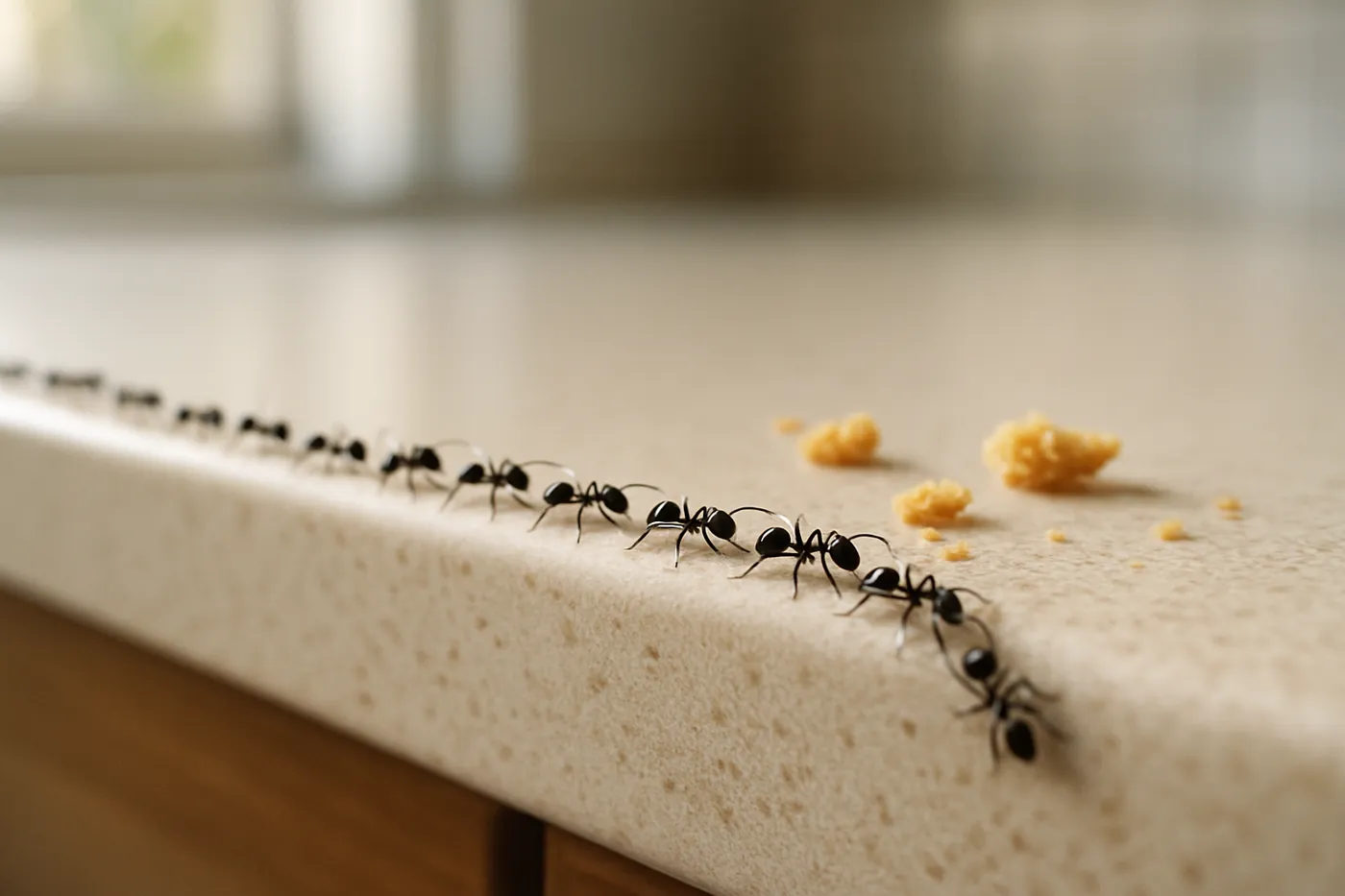
Ant control in Cleburne, TX is about treating the colony, not chasing the trail, because the ants you see on the counter or in the yard are only the workers, and the queen back at the nest keeps replacing them. Cleburne homes deal with the full North Texas ant lineup: red imported fire ants that take over yards, carpenter ants that tunnel into damp wood, and odorous house ants that march across kitchen counters. The hot summers and that heavy blackland clay soil make this prime ant country. One call gets you a local exterminator who identifies the species and treats it at the source across Cleburne, with a no-obligation quote and lines open 24/7.
The ants that invade Cleburne homes and yards
Different ants call for different treatments, so knowing which one you have matters more than it might seem. The three species below behave nothing alike, nest in different places, and feed on different things, which is exactly why a single product off the shelf rarely handles all of them:
- Red imported fire ants. The aggressive mound-builders that take over lawns, sting in groups, and pop up after rain. Their mounds dot yards across Johnson County, and they are a real hazard for kids, pets, and anyone working in the yard.
- Carpenter ants. Large black ants that nest in damp or softened wood, hollowing it out to live in. They leave small piles of shavings and can be mistaken for a termite concern.
- Odorous house ants. Small ants that trail indoors to water and sweets, giving off a faint coconut-like smell when crushed. They are the classic kitchen-counter ant.
A local exterminator starts by identifying the ant, because the bait, the placement, and the strategy all change depending on the species. A bait that fire ants carry home means nothing to a carpenter ant nesting in a wet windowsill, and a treatment aimed at a kitchen trail does little for a yard full of mounds. Getting the species right on the first visit is what makes the treatment actually work, and it is the part a homeowner usually cannot do from a hardware store shelf.
Why spraying the trail fails
Here is the mistake almost everyone makes: you see a line of ants, you spray it, the ants die, and you feel done. Then a few days later a new trail shows up, sometimes in the same spot, sometimes a foot over. The reason is simple. The trail is a tiny fraction of the colony, and the queen and the brood are safe in a nest you never touched. Worse, repellent sprays can scatter some colonies into smaller satellite nests, so you trade one trail for several. Fire ants do the same thing when you drench a single mound and the colony just relocates and rebuilds nearby. The fix is to treat the colony itself. A local exterminator uses slow-acting bait that the workers carry back and feed to the queen and the brood, taking down the whole nest, then closes off the entry points and food draws that invited the ants in. That is the difference between a week of quiet and an actual end to the problem.
How a local exterminator treats ants at the source
The process is built around reaching the colony, not just the workers you can see. Patience is part of it: good ant control with bait can take a little time to work all the way through the colony, because the goal is to let the workers spread it before they die, not to drop them on contact at the trail. That short wait is what kills the queen, and it is why a treatment that looks slower on day one clears the problem for good while a fast knockdown spray never does.
Inspection. The exterminator follows the trails to find where the ants enter and where they nest, inside and out, and identifies the species. Carpenter ant work means hunting down the damp wood they are nesting in, which often points to a moisture issue too.
Targeted treatment. For house ants, the exterminator places bait along the trails and at entry points so workers carry it back to the colony, paired with a perimeter treatment to stop new ones. For fire ants, the exterminator baits and broadcasts across the yard so the treatment reaches every mound and the colonies feeding them. For carpenter ants, the exterminator treats the nest directly and the spots they travel.
Prevention. The exterminator then closes the doors that let ants in: gaps around windows and doors, cracks in the slab, utility line entries, and the moisture and food sources drawing them. Fixing a leaky hose bib or trimming shrubs off the house removes the conditions ants love.
Carpenter ants and the termite question
Carpenter ants deserve a closer look, because they cause the most confusion. People see large dark ants near the woodwork and immediately worry about termites, and the worry is fair, since both insects damage wood. The difference is in how. Termites eat the wood itself for food, hollowing it from the inside. Carpenter ants do not eat wood at all. They chew through it to carve out galleries to nest in, then push the shavings out, leaving little piles of what looks like sawdust below the spot. Carpenter ants almost always go after wood that is already damp or soft, so finding them often points to a moisture problem too: a roof leak, a sweating pipe, a window that lets water in. A local exterminator identifies which insect you actually have, tracks the carpenter ant nest to its source, and treats it, while flagging the moisture that invited it. If the inspection turns up termites instead, that is a different job, handled on the termite control in Cleburne page. Getting the identification right is the whole point, because the wrong treatment wastes money and leaves the real problem working.
Clay soil, rock beds, and the summer peak
Cleburne's ground and climate set the stage for heavy ant pressure. The blackland clay soil holds moisture and cracks in the dry heat, and ants, especially fire ants, build right into those cracks and along foundation edges. The rock and gravel landscaping common in newer subdivisions near the Chisholm Trail Parkway gives ants warm, protected harborage between the stones, where colonies settle in and stay out of sight. Summer is the peak. As temperatures climb into the triple digits, fire ant mounds multiply across lawns, and house ants push indoors hunting for the water and food your kitchen offers. After a summer rain, fire ant mounds seem to appear overnight as the colonies move up out of saturated soil. The mild Cleburne winters do not knock ant populations back the way a hard freeze would, so colonies survive and start the next year strong. That year-round survival is exactly why local treatment, tuned to the season, beats a one-time spray. A general pest control plan keeps a steady barrier against house ants and the other crawlers between dedicated treatments.
Fire ants in the yard and what they cost you
Fire ants deserve their own warning, because they are the ant most likely to send a Cleburne homeowner running for the phone. A red imported fire ant colony can hold hundreds of thousands of ants, and the mound is just the visible part of a tunnel network spreading under the lawn. Disturb a mound and the workers boil out fast, gripping with their jaws and stinging in groups, leaving the burning welts the species is named for. That makes a fire ant yard a genuine problem for small children, pets, and anyone gardening or mowing. They also chew into outdoor electrical boxes, irrigation valves, and AC units, drawn to the warmth and the currents. Knocking over the mounds you can see does almost nothing, because the colony simply shifts and rebuilds, often splitting into several mounds where there was one. A local exterminator treats the whole yard, so the bait reaches the colonies you can see and the ones you cannot, and the queens go with them. For a lot with steady mound pressure, a seasonal yard treatment keeps the lawn usable through the worst of the summer instead of surrendering it to the ants.
Ant control near me in Cleburne
When you search for ant control near you, what you want is someone who knows the local ants and how they behave, not a generic spray service. An exterminator who works Cleburne and Johnson County every week knows the fire ant mounds that take over yards after a summer rain, the carpenter ants that turn up in the damp wood of older homes, and the house ants that follow the same kitchen trails year after year. That experience means the right bait, the right placement, and the colony actually gone instead of a trail that keeps coming back. The same local exterminator serves the towns around Cleburne, including Burleson and Keene, so help is close no matter where in the county you are. One call gets you a local exterminator, the quote is free, and the lines are open day and night.
Get a no-obligation ant control quote
Whether it is a yard full of fire ant mounds, a line of ants across the kitchen, or large ants near the woodwork, the answer is the same: reach the colony, not just the trail. Call (817) 391-2315 to get a local exterminator serving Cleburne and nearby towns like Joshua and Crowley, with a no-obligation quote and upfront pricing. Lines stay open 24/7, and a local exterminator takes it from there. See every service on the Cleburne Pest Control home page.