Few pests rattle a homeowner like flipping on the kitchen light and watching roaches scatter for the baseboards. Cockroach control in Cleburne, TX is about more than the few you spot. For every roach in the open there are dozens hidden in warm, damp cracks you never see. Whether you live in an older downtown home off Main Street or a newer subdivision out toward Lake Pat Cleburne, a local exterminator can find the harborage, treat it at the source, and stop the cycle that keeps roaches coming back. One call gets the inspection started.
The two roaches you see most in Johnson County
Almost every roach call in Cleburne comes down to one of two species, and they behave nothing alike.
The German cockroach is the one that turns into an infestation. It is small, light tan, and marked with two dark stripes behind the head. German roaches live indoors year round and breed at a frightening pace. A single egg case holds 30 to 40 eggs, and a female produces several in her lifetime. They crowd into kitchens and bathrooms because that is where the warmth, food, and moisture are: behind the refrigerator, inside the dishwasher motor housing, under the sink, in the seams of cabinets, and behind the stove. If you see German roaches in daylight, the hiding spots are already full and the colony has run out of room. That is a sign the problem is big, not small.
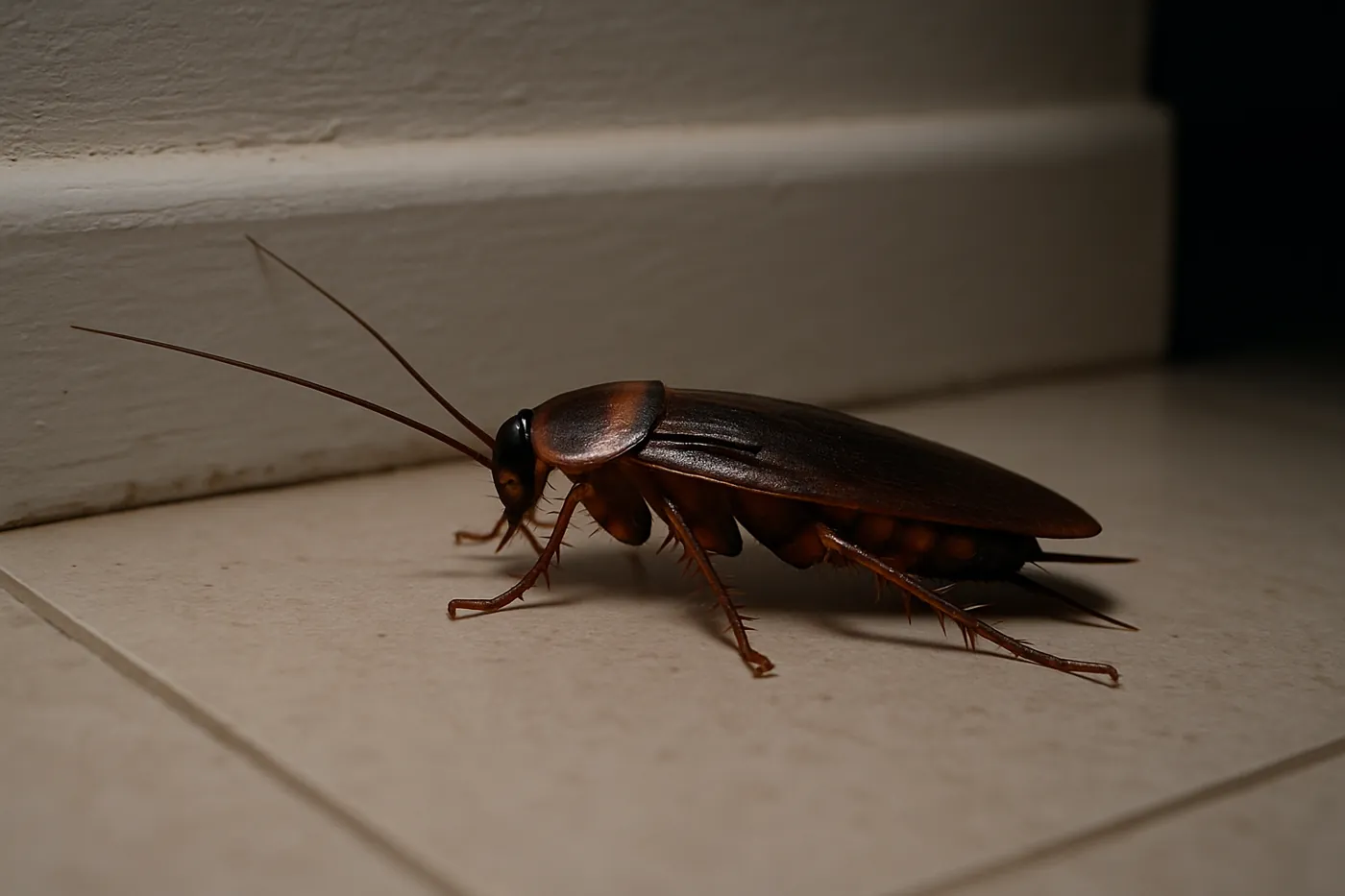
The American cockroach is the large reddish-brown one people call a water bug or palmetto bug. It can reach an inch and a half or more. These roaches live in drains, sewers, crawl spaces, and mulch beds, and they wander indoors through floor drains, gaps under doors, and pipe penetrations, especially after heavy rain pushes them up out of the sewer system. They do not breed indoors the way German roaches do, so the fix usually means treating entry points and the moist areas outside that draw them in.
Signs of a roach problem and why they matter here
Catch a roach problem early and it is cheap and fast to clear. Let it run and it spreads through the walls into neighboring rooms. Watch for these signs: live roaches seen during the day, a musty or oily smell in a heavy infestation, pepper-like droppings in drawers and cabinet corners, smear marks along baseboards, shed skins, and the small brown egg cases (capsules) tucked into cracks. Finding egg cases means roaches are breeding inside, not just passing through.
This is not only a nuisance. Cockroaches track bacteria across food surfaces, and their droppings and shed skins are a known asthma and allergy trigger, which matters in homes with kids or anyone who already struggles to breathe. Cleburne's hot, dry summers push American roaches toward the moisture inside your house, and the storms that roll through the blackland prairie flush them up out of drains. Both seasons keep a local exterminator busy.
How a local exterminator treats roaches at the source
Store-shelf sprays are the reason a lot of roach problems drag on for months. A foggers-and-spray approach scatters German roaches deeper into the walls, splits the colony, and trains them to avoid the treated surface. An exterminator works the opposite way.
First comes the inspection. The exterminator identifies the species, finds the harborage, and reads the moisture and food sources feeding the colony. Next comes targeted treatment: gel bait placed precisely where roaches travel and feed, plus insect growth regulators that stop the young from maturing and breeding. Roaches carry the bait back to the harborage and feed it to the rest, so the treatment reaches roaches you never see. For American roaches, the exterminator seals entry points and treats the damp exterior zones, drains, and crawl spaces that draw them in.
The last piece is prevention. The exterminator will point out the leaks, gaps, and clutter that keep roaches fed and hidden: a dripping trap under the sink, a worn door sweep, cardboard stacked in the pantry. Fixing those, plus good sanitation, keeps the treatment working. Heavy German roach jobs usually need a follow-up visit to catch the next generation as egg cases hatch.
Roaches and the Cleburne seasons
Roach pressure shifts with the North Texas calendar. In the triple-digit heat of summer, American roaches leave the dry mulch and crawl spaces and head for water indoors, so calls climb in July and August. When a storm dumps rain on the blackland clay, the soil cannot soak it up fast and standing water plus an overloaded sewer system drives roaches up through floor drains overnight. German roaches do not care about the weather. They live in the warm pocket behind your appliances all year, which is why an indoor infestation needs treatment whenever you find it, not just in summer.
If roaches came in with a problem next door, it is worth handling pests across the board. Our general pest control plans in Cleburne keep roaches, ants, and other crawling pests in check on a recurring schedule, and homes that fight roaches often deal with rodents drawn to the same food and moisture. An exterminator can roll those into one visit. Roaches do not stop at the city line either, so local exterminators also cover roach problems in nearby Joshua and Burleson. Start at our home page if you want the full service list.
Stop the roaches before they spread
A roach problem only gets bigger and harder to clear the longer it sits, because every week is another batch of egg cases. The fastest fix is a real inspection and bait treatment from a licensed, insured local exterminator who treats the source instead of chasing the ones on the counter. Call (817) 391-2315 for a no-obligation quote. Lines are answered 24/7 across Cleburne and Johnson County, and a local exterminator takes it from there.